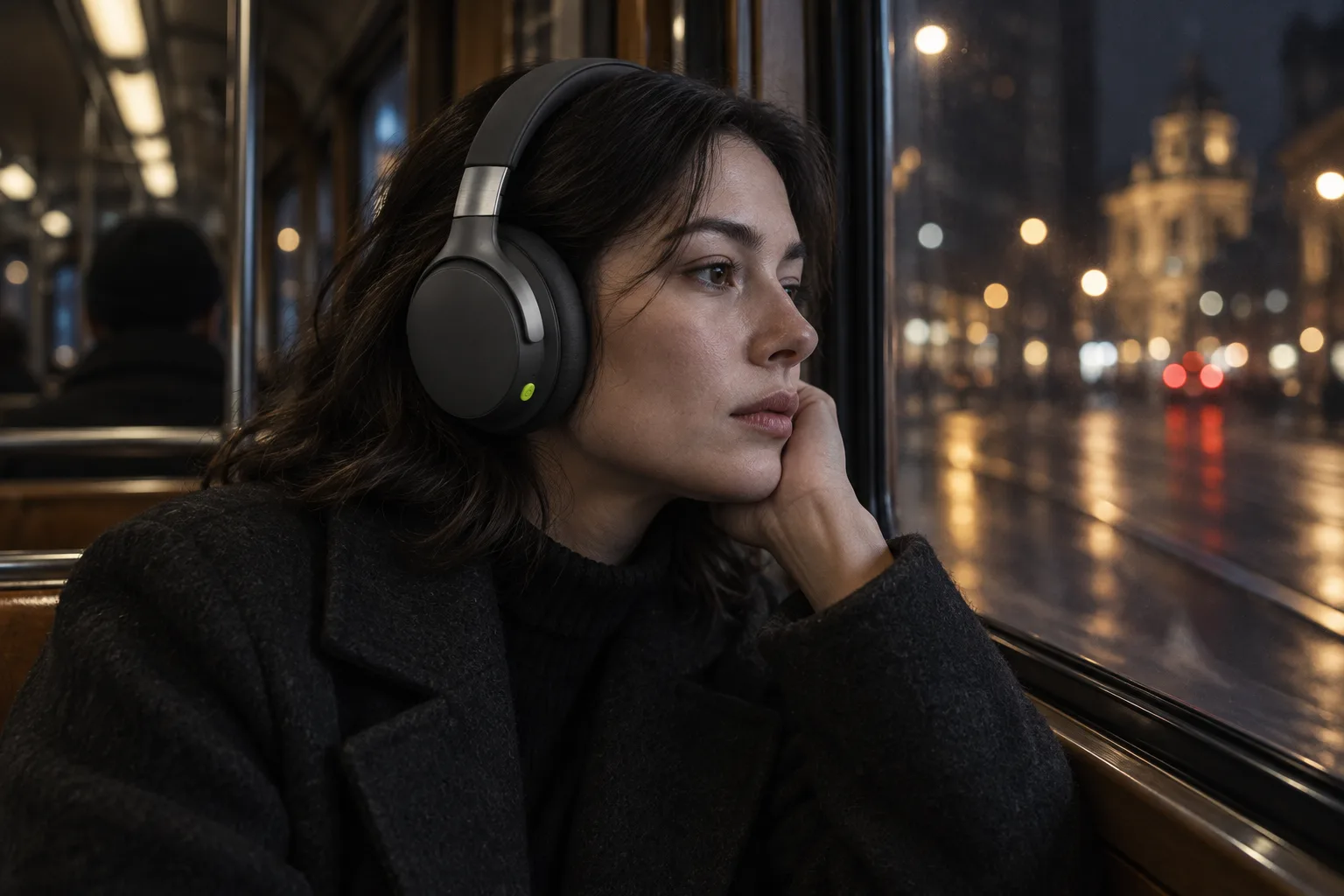
Switch on noise cancellation on a train and the low rumble of the wheels and the motor fades almost completely. The person talking two seats away is quieter, but you can still hear them. That is not a fault in your headphones. It is how active noise cancellation works, and once you know why, you can set up your headphones to get the most out of it.
We spent two weeks riding the MAX Blue Line and two TriMet bus routes in Portland with a sound level meter and a pair of measurement microphones, comparing what reaches your ear with ANC off, on and in transparency mode. Here is what we learned, including where ANC does very little.

How noise cancellation works
Sound is a pressure wave. If you play a second wave that is its exact mirror image, the two cancel out. Headphones do this with small microphones and a fast processor that calculates the opposite wave thousands of times a second and plays it through the same driver as your music.
There are two places to put the microphone, and each has its strengths:
- Feedforward: a microphone on the outside of the ear cup hears the noise before it reaches you. It reacts early and handles the middle of the range well, but it cannot hear what actually arrives inside the cup, and it picks up wind.
- Feedback: a microphone inside the cup, next to the driver, hears what your ear hears and corrects whatever is left. It is very good at low, steady rumble and ignores wind, but it has less time to react.
- Hybrid: both at once. Arc ANC uses hybrid cancellation, so the outer microphones catch the noise early and the inner ones clean up the rest. Pod Mini fits three microphones into each bud for the same job.
Either way, the processor needs a wave it can predict. A train motor, an air conditioner or a bus engine repeats the same pattern over and over, and ANC handles it easily. A voice, a door chime or a dropped coffee cup changes from one moment to the next, so there is nothing to predict.
What we measured on a train and a bus
We split the sound into two bands: the low rumble below 500 Hz, where engines and wheels live, and the 1–4 kHz band, where speech and announcements sit. Each figure is the average of six rides at rush hour.
| Where | No headphones | ANC off | ANC on | Rumble, ANC on | Voices, ANC on |
|---|---|---|---|---|---|
| MAX light rail | 74 dBA | 66 dBA | 52 dBA | −31 dB | −14 dB |
| City bus | 72 dBA | 65 dBA | 53 dBA | −28 dB | −13 dB |
| Bus, Pod Mini | 72 dBA | 67 dBA | 56 dBA | −23 dB | −11 dB |
A drop of 10 dB sounds roughly half as loud, so the rumble on the MAX fell to about an eighth of its volume. Voices dropped too, but mostly because of the ear cushions, not the electronics. Turn ANC off and the voice band changes by only 3–4 dB; the rumble, by contrast, comes straight back. Pod Mini cancels less of the low end than Arc because a small bud has a small driver and less room for microphones, but it still takes out more than half of what you hear.
“Noise cancellation removes the drone that tires you out. The cushions do the rest. If the seal is wrong, no processor can make up for it.”
Daniel Reyes, head of product
When ANC falls short
Some sounds get through every pair of headphones we have tested, ours included. The squeal of brakes on a curve is too high and too sudden. A baby crying or a loud conversation at the next seat is irregular, and the cushions only take the edge off. Wind is a problem of its own: on a windy platform the outer microphones hear the gusts and can turn them into a low whoosh. On a gusty platform, switching to transparency mode until the train arrives is often the quieter choice.
The most common cause of weak cancellation is a poor seal. Glasses with thick arms, a hood under the ear cups or earbud tips one size too small let noise leak in around the edges, and we measured up to 9 dB less rumble reduction with a pair of chunky frames.
Set up your headphones for the commute
A few minutes of setup make more difference than any setting buried in an app:
- Get the fit right first. With earbuds, try every tip size; the right one feels snug without pressure. With over-ear headphones, move the cups until the cushion sits on your skull, not on your ear.
- Use transparency mode near your stop. It lets voices and announcements through without taking the headphones off, and keeps you aware of traffic on the walk home.
- Turn the volume down. With the rumble gone, most of our testers settled about 8 dB lower than with ANC off, which is easier on your hearing over a year of commutes.
- Charge once a week. Arc runs up to 40 hours with ANC on, and ten minutes on USB-C adds five hours if you forget.
-
Shop the story
Color: 2
Original price was: $299.$249Current price is: $249.Ships in 1 business day
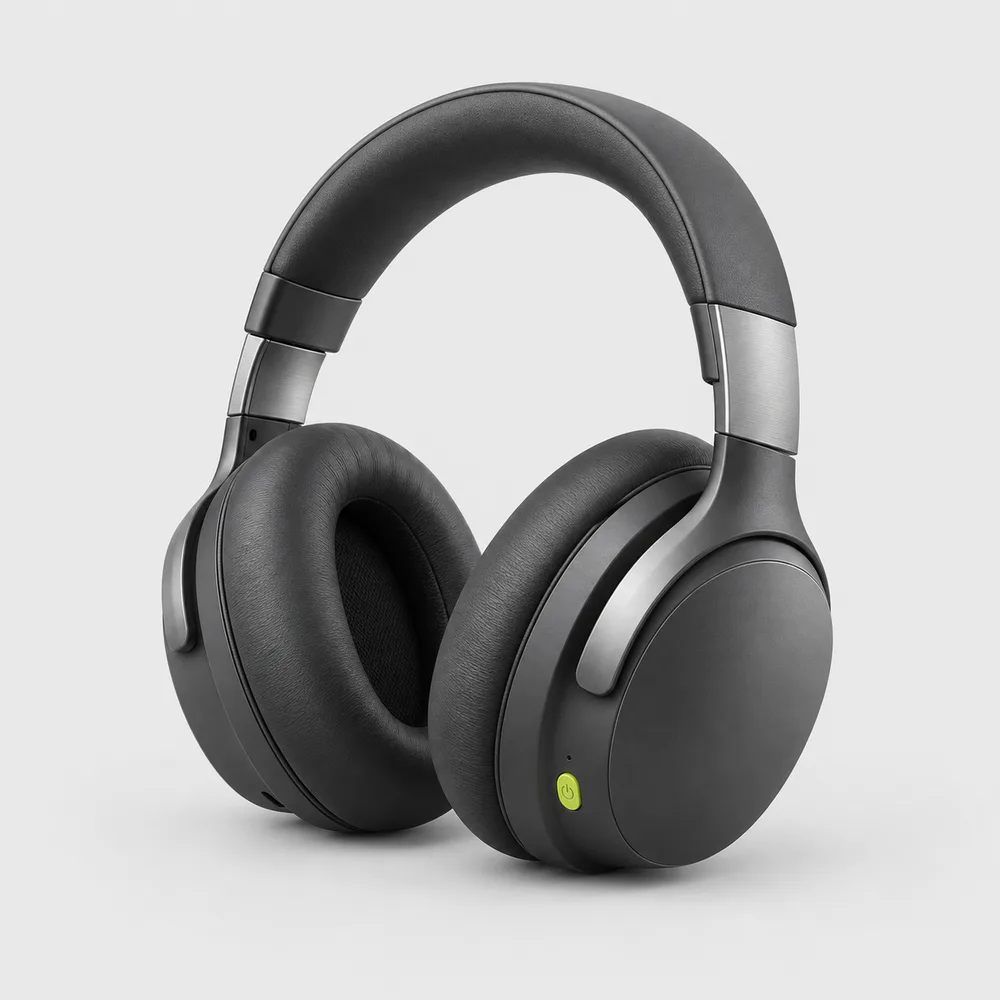
View: Arc ANC
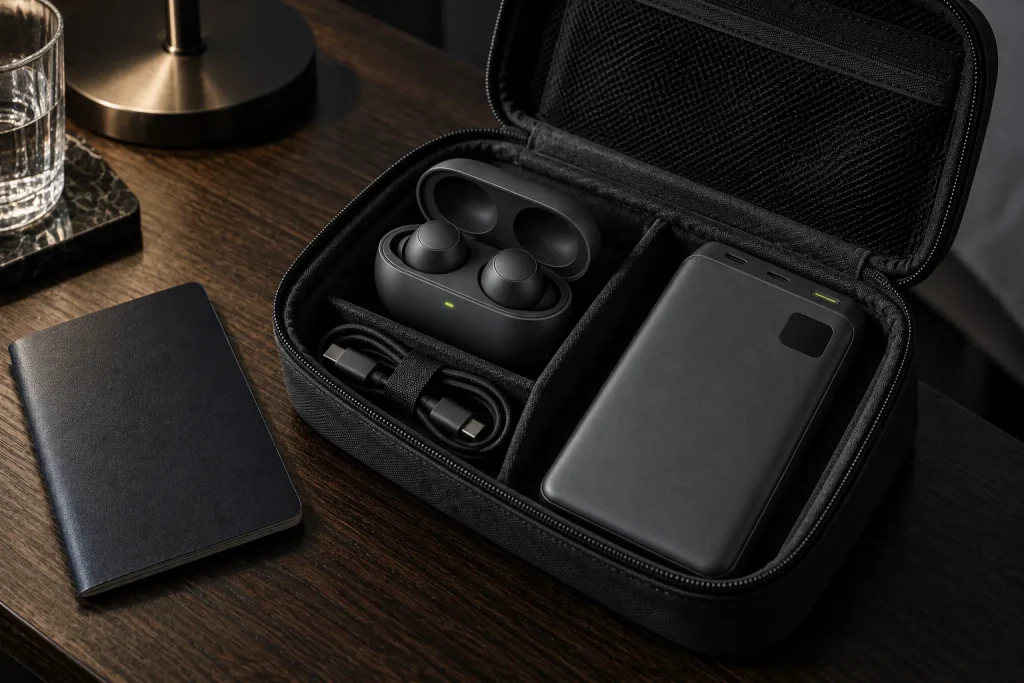
Over-ear or in-ear comes down to how you travel. Arc cancels more and is easier to wear for a long ride, but at 9 oz it is something to carry. Pod Mini fits in a coat pocket and survives rain on the walk to the stop. If you also fly, both pack easily; our travel packing list has the rest of the pouch, including a power bank that tops up headphones and a phone on the way.